The Shape Life Takes – Migration, Devotion and the Discipline of the Living World (Part 1)
Updated: Feb 17
This is the first essay in a five-part study examining how life is organised by invisible maps – biological, ecological, cultural and symbolic – and how those maps shape movement, belonging and transformation.
Migration is often described as spectacle. Images of vast herds, soaring birds or bodies battling current are framed as feats of endurance, as if the living world were engaged in acts of heroism. Yet beneath the drama of image lies something quieter and more exacting. Movement in the natural world is not improvisation. It is patterned response. It is alignment with embedded structure.
Across species, orientation is not learned through debate. It is carried within tissue and nerve, within hormonal shift and geomagnetic imprint. The map is not consulted. It is inhabited.
On Antarctic ice, the emperor penguin stands through winter darkness holding a single egg balanced on his feet. For weeks he fasts while wind tears across the plateau and temperatures collapse. When the female returns from sea, he may have lost nearly half his body weight. Nothing about this gesture is sentimental. It is not sacrifice in the moral sense. It is adherence. His body follows an internal programme calibrated to light, season and species survival. Discipline here is not chosen. It is inscribed.
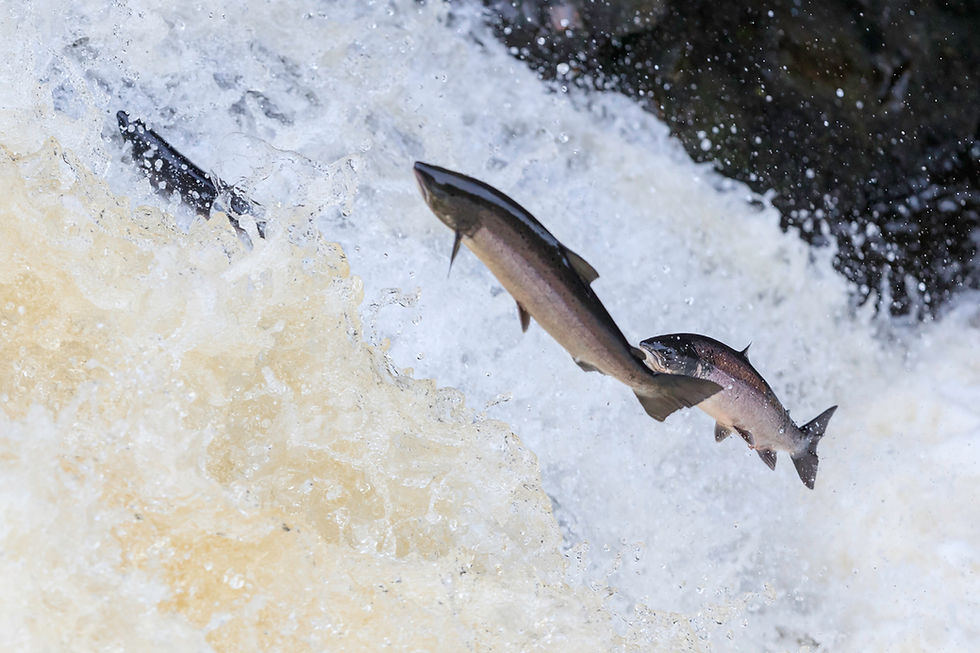
Elsewhere, another body moves in a different register of the same design. The Atlantic salmon leaves the ocean and turns toward freshwater, guided by geomagnetic orientation and the chemical trace of natal rivers. It travels against current, climbing elevation, expending itself in ascent. After spawning, it dies, and in death feeds the watershed that once carried it to sea. Nutrients move from ocean to forest. What appears as an individual journey is in fact a circulatory system linking ecosystems. The map does not end at reproduction. It completes itself in redistribution.
The female octopus offers an even starker example of biological precision. After laying her eggs, a hormonal cascade alters her behaviour so completely that she ceases to feed. She guards and aerates the clutch for weeks or months, preventing fungal growth and predation. Without this shift, she would consume her own offspring. The same instinct that drives survival is deliberately restrained by another internal command. She dies shortly after the young hatch. There is no audience for this act, no communal recognition. It is regulation embedded within flesh.
Movement is not always horizontal. In polar waters, Antarctic krill rise each night toward the surface and descend again by day, travelling hundreds of metres through the water column in response to light. This daily vertical migration is among the largest biomass movements on Earth. Through it, carbon is transported from surface waters to depth. The smallest bodies participate in planetary cycling. Orientation here is measured not in miles across continents, but in metres through columnar sea. Yet the pattern is no less exact.
Across tundra, reindeer traverse seasonal routes worn into memory by generations. Across rivers, eels move between freshwater and oceanic spawning grounds, their bodies transforming physiologically as salinity shifts. Across air currents, birds align themselves with wind corridors invisible to human sight. Whether the journey spans thousands of kilometres or a few hundred metres, the principle remains constant. Movement follows structure.
What unites these examples is not distance or endurance. It is calibration. Magnetic fields, seasonal light, inherited timing, hormonal clocks – the invisible forces that govern direction operate without spectacle. The living world does not deliberate over whether to move. It responds when conditions align. It returns when cycles demand.
There is spaciousness in recognising this. The discipline of the living world does not argue with its design. It does not narrate its own perseverance. It moves because movement is inscribed within it as continuity.
To observe these migrations closely is to realise that what appears extraordinary is in fact structural. The map precedes the journey. The body carries what the eye cannot see.
If this is so – if non-human life is guided by embedded maps that organise departure and return, endurance and completion – then the question becomes more difficult and more urgent. Human movement is no less ancient. Trade routes, nomadic corridors, exile, pilgrimage and forced passage have shaped civilisation as surely as rivers shape valleys.
What maps do humans carry, and how are they recognised – or refused – when we cross into new terrain?
That enquiry belongs to the second part in this series.
© 2026 Niamh Criostail and Heartlands Publishing. All rights reserved.
For those who wish to remain in seasonal conversation with this work, the seasonal newsletter is where the full-length writings are shared and where exclusive invitations to view each seasonal collection are quietly extended. This is where Irish cosmology, the Celtic Wheel of the Year, elemental philosophy, archetypal psychology, mythology and folklore, land-based practice, and traditional ways of making are carried in depth throughout the year.
It is not a mailing list, but a steady correspondence – written for those who value continuity, craft, and a slower, more faithful relationship with the seasons. This is where the work is received in full, and where each collection is revealed.
Sign up at theheartofritual.com/seasonalnewsletter
Photo credit: Salmon Watch Ireland
